
Kevin Clarke
Operetta Research Center
2 December, 2025
When the Theater am Goetheplatz unveiled its new production of Sissy, the 1932 operetta by violin virtuoso–turned–composer Fritz Kreisler with a libretto by Ernst and Hubert Marischka, audiences might have expected another nostalgic stroll through the Alpine idyll made famous by the Romy Schneider films. What they got instead was a gleefully subversive, sharply ironized, and visually audacious re-imagining that upends expectation — beginning with who plays whom.
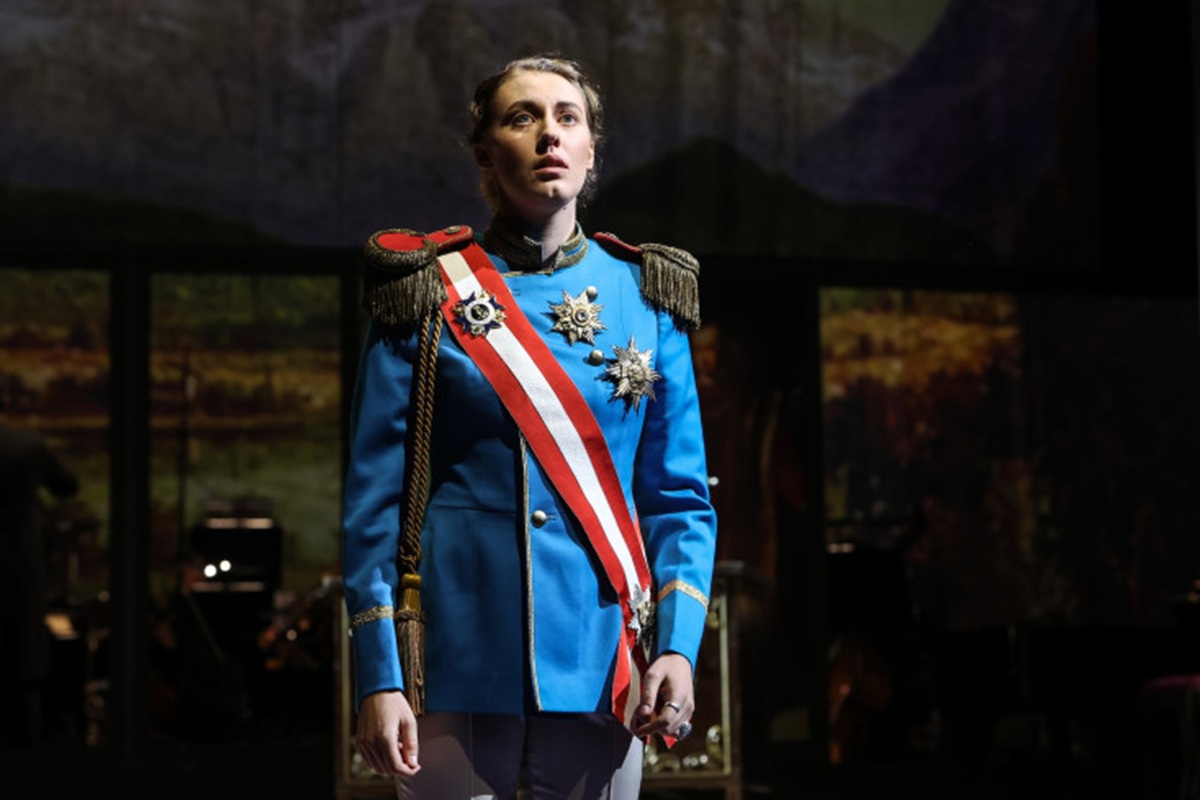
Lieke Hoppe als Emperor Franz Josef in “Sissy”. (Photo: Jörg Landsberg/Theater Bremen)
Stage director Frank Hilbrich approaches Sissy with what the theater’s website calls “bite and musical meringue,” turning the operetta’s sugar-coated imperial romance into a mischievous romp somewhere between satire, comedy of manners, and sentimental parody. Instead of the soft-focus Empress Elisabeth known from decades of television broadcasts, Hilbrich introduces a heroine who skims across Lake Starnberg in a tiny sailboat, gleefully dismantling aristocratic etiquette from Ischl to the Vienna Woods. “No eye stays dry, no waltz remains undanced, no convention unbroken,” the theater promises — and for once, the slogan fits.
What truly sets this production apart is its radical gender-reversed casting. The Weser-Kurier dubbed the staging a “cheeky travesty,” marveling at “Elisabeth, Empress of Austria, as a baritone?” and “the Kaiser’s colonel in a tutu?” It is, as the paper notes, a version of Sissy “we have never seen before.”
Swedish baritone Arvid Fagerfjäll leads the cast as Elisabeth, called Sissy, while Bremen-born actor Lieke Hoppe takes on the role of Emperor Franz Joseph. Mezzo-soprano Ulrike Mayer transforms into Sissy’s father, Duke Max, in oversized Lederhosen, and bass Christoph Heinrich appears as her mother Ludovica. The result is a complete inversion of this operetta’s traditional gender codes.
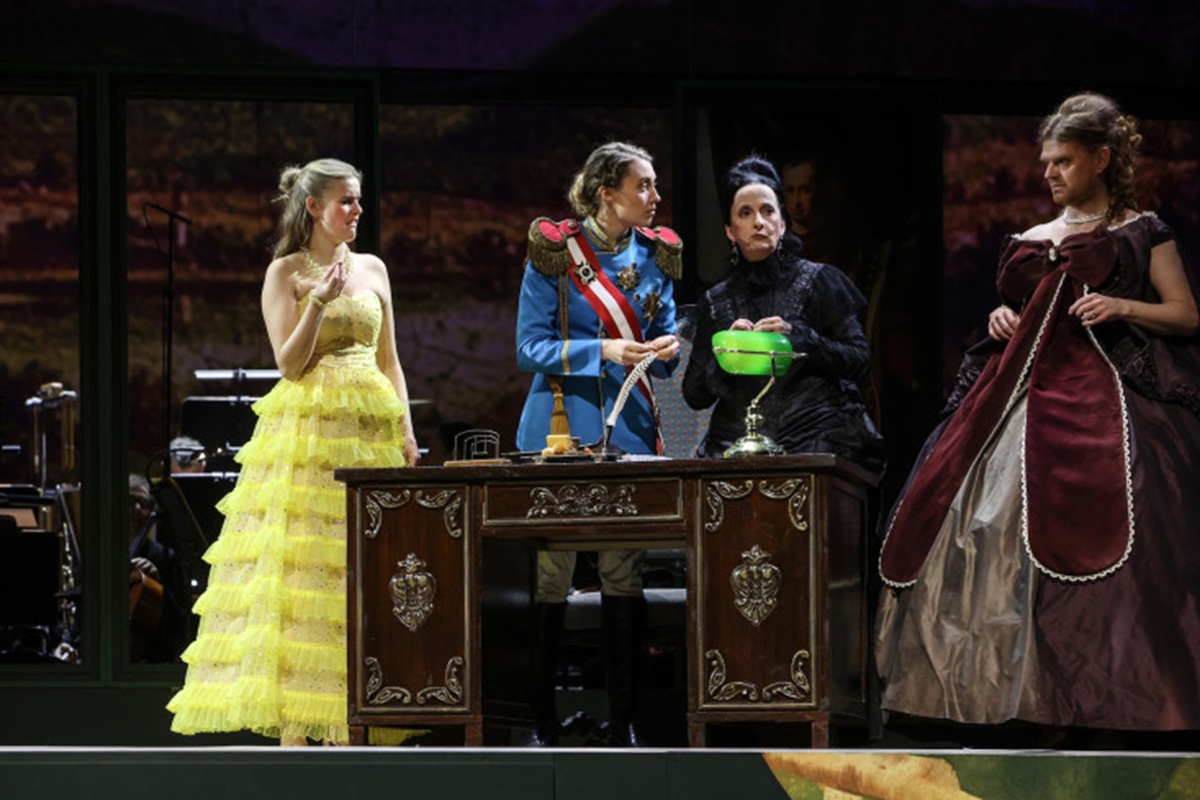
The protagonist’s in the (mostly) gender-reverse “Sissy”. (Photo: Jörg Landsberg/Theater Bremen)
A Broadway Impulse Arrives in the Operetta World
Gender-reversed casting has drawn substantial attention in the contemporary musical world — most prominently in the all-FLINTA-of-color cast of the 2022 Broadway revival of 1776 and the London/Broadway hit Company, in which Sondheim’s eternal bachelor “Bobby” became “Bobbie.” Yet such casting remains rare in the German-speaking operetta landscape, which tends to cling to convention. Hilbrich’s Bremen staging proves how electrifying the approach can be when applied to a genre historically bound to type, costume, and nostalgic cliché. At least in the case of Sissy.
Kreisler’s Operetta — and Its Hidden History
Kreisler composed Sissy as a Singspiel, premiered at the Theater an der Wien in December 1932 with celebrated dramatic actress Paula Wessely in the title role — notably not an operatic soprano. Hans Jaray played Franz Joseph, and Hubert Marischka himself appeared as Duke Max.
The operetta loosely follows the later Marischka film trilogy: the first meeting between Elisabeth and Franz Joseph in Ischl and the supposed spark of an epic imperial romance. Kreisler drew heavily on his own violin repertoire, weaving in favorites such as the “Wiener Marsch,” “Liebesleid–Liebesfreud,” “Schön Rosmarin,” and the Caprice Viennoise. Among the original numbers, the waltzes “Ein stilles Glück, ein bisserl Musik” and “Ich wär’ so gern einmal verliebt” stand out as melodic highlights.
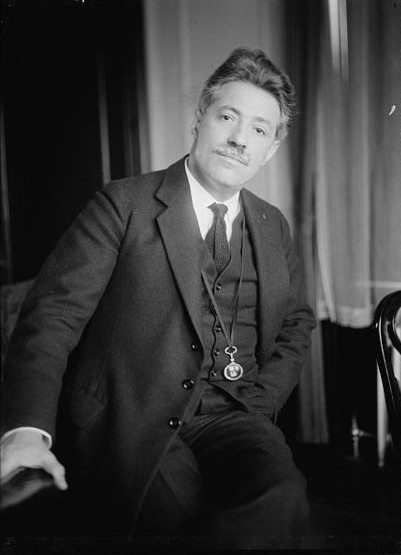
Composer and violinist Fritz Kreisler.
The premiere was a sensation. Kreisler even cancelled his American tour — forfeiting $50,000 — to conduct opening night. The theater remained sold out for months, and audiences rose to the Kaiserhymne at every curtain call, despite the monarchy having been abolished fourteen years earlier.
Wessely’s other obligations soon required additional casts: Hedy Lamarr — who would later become a major Hollywood and MGM star — stepped in as the second Sissy, making a memorable entrance on horseback. She was followed by Rose Stradner. After the Anschluss, the work could no longer be performed due to Fritz Kreisler’s Jewish background; the rights has been sold to Universal Pictures, which produced the film The King Steps Out.
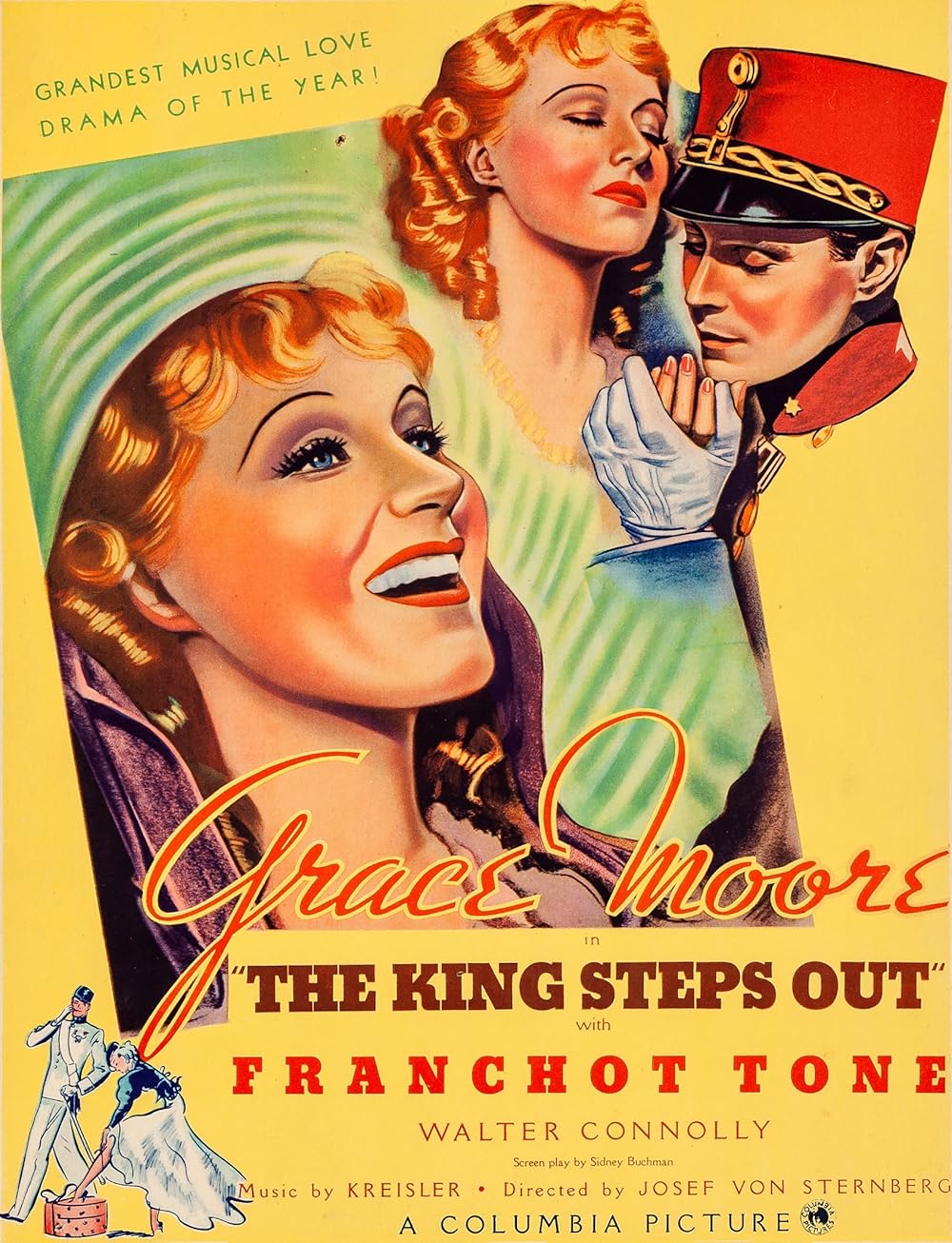
The 1936 movie “The King Steps Out”. (Photo: Universal Pictures)
New Edges, New Irony
Bremen’s production does more than “step out” and swap genders. Music director Stefan Klingele leads from the piano and has inserted several cleverly placed songs by satirist Georg Kreisler, whose caustic irony cuts through the sweetness of Fritz Kreisler’s melodic charm. The juxtaposition provides what Klingele calls a “pointed, wicked edge,” sharpening the operetta’s humor and undercutting Austria’s saccharine imperial mythology.
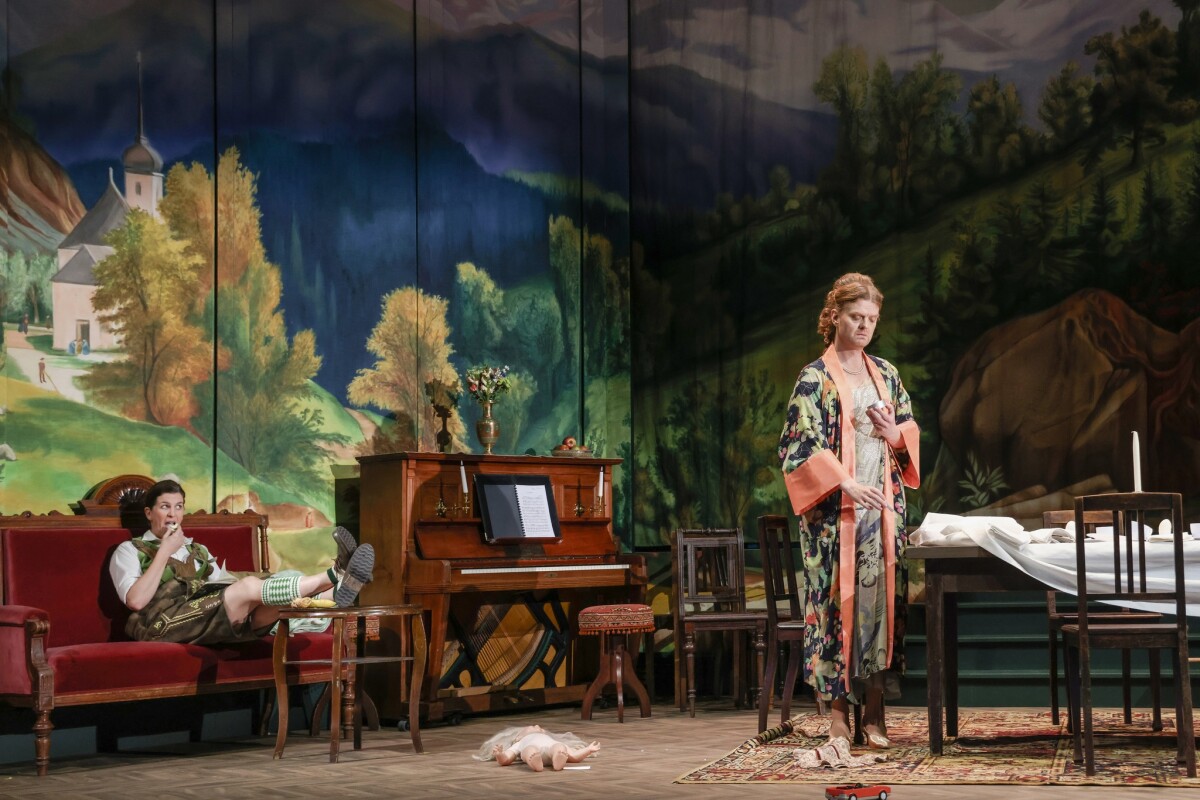
Ulrike Mayer as Herzog Max in Bayern and Christoph Heinrich as his wife Ludovica in “Sissy”. (Photo: Jörg Landsberg/Theater Bremen)
Klingele himself praises the score as “very good music,” full of “wonderful melodies” and “smooth, never flat waltzes.” Operetta, he notes, requires a superb ensemble, an excellent orchestra, and above all courage — and Bremen, he suggests, has plenty of it.
Critics Enthralled — and Audiences Converted
In his review for Deutschlandradio Kultur, critic Uwe Friedrich lauds the production for encouraging audiences to rethink their assumptions about gender roles. Initially overhearing skeptical remarks from fellow theatergoers, he later watched the same neighbors leap to their feet “as if at a pop concert” during frenzied ovations.
Friedrich also praises Volker Thiele’s set (with costumes by Gabriele Rupprecht): a perfectly kitschy Alpine panorama printed on roll-down backdrops that are gradually destroyed over the course of the evening — an act of literal deconstruction somewhere “between The Sound of Music and Bully Herbig.” In one scene, Ludovica (played by bass Christoph Heinrich) demurely informs her husband that she cannot be kissed because she is “not properly shaved,” producing one of the night’s loudest laughs.
Friedrich argues that after a while, “it no longer matters whether men play women or women men. What appears onstage are simply roles.” Bremen’s theater, he says, avoids heavy-handed political messaging and instead delivers productions that address contemporary themes through entertainment — “and they do so magnificently.”
The Weser-Kurier echoes the praise, calling the staging a “sassy boulevard revue” delivered with “resounding success.” Fagerfjäll’s silver-clad Sissy “stirs up the imperial court like no princess before her,” and the Chaplin-inspired food-fight waltz with Franz Joseph — complete with birthday cake — is described as one of the most endearing culinary love scenes “since Lady and the Tramp.”
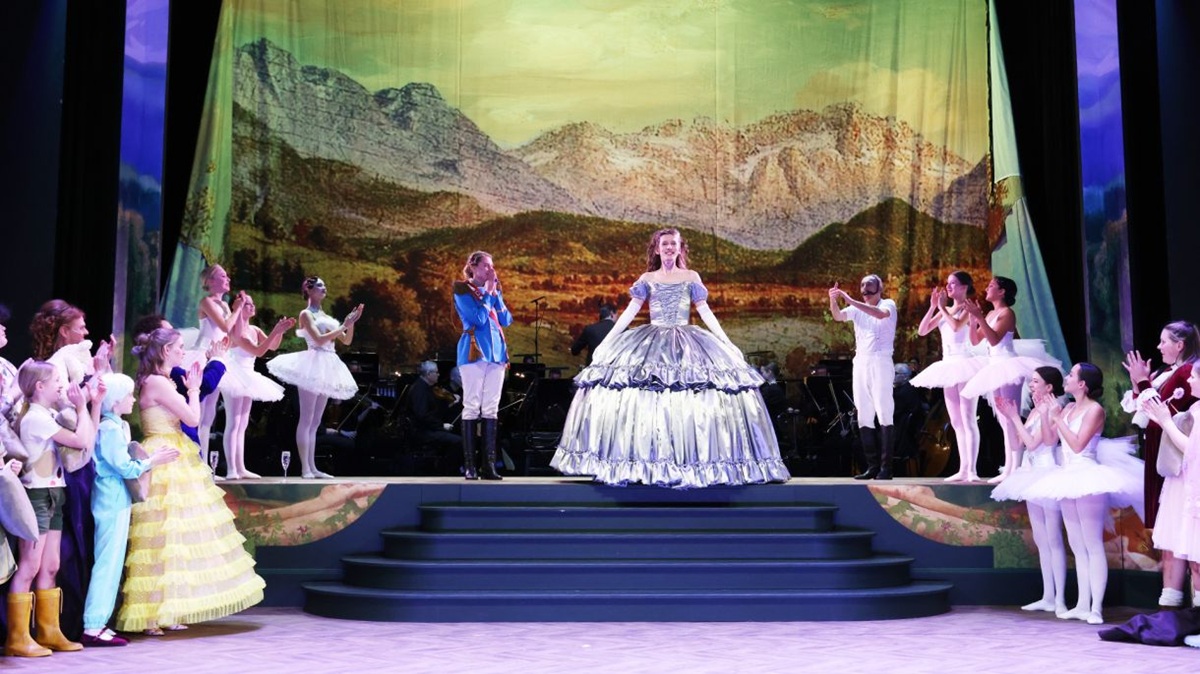
“Sissy” with an alpine parnorama in Frank Hilbrich’s production. (Photo: Jörg Landsberg/Theater Bremen)
Bremen Zwei’s Christine Gorny celebrates the evening as “really grand cinema,” immensely entertaining yet never tipping into farce. The audience rewarded the premiere with unanimous standing ovations.
A Genre Renewed
Hilbrich had already demonstrated an uncommonly sure hand in operetta with his earlier Bremen staging of Künneke’s Vetter aus Dingsda, especially through an exceptional cast: Alen Hodzovic and Nicky Wuchinger were nothing short of sensational as the first and second strangers, and Florian Ziemen at the podium made the familiar score sound genuinely new.
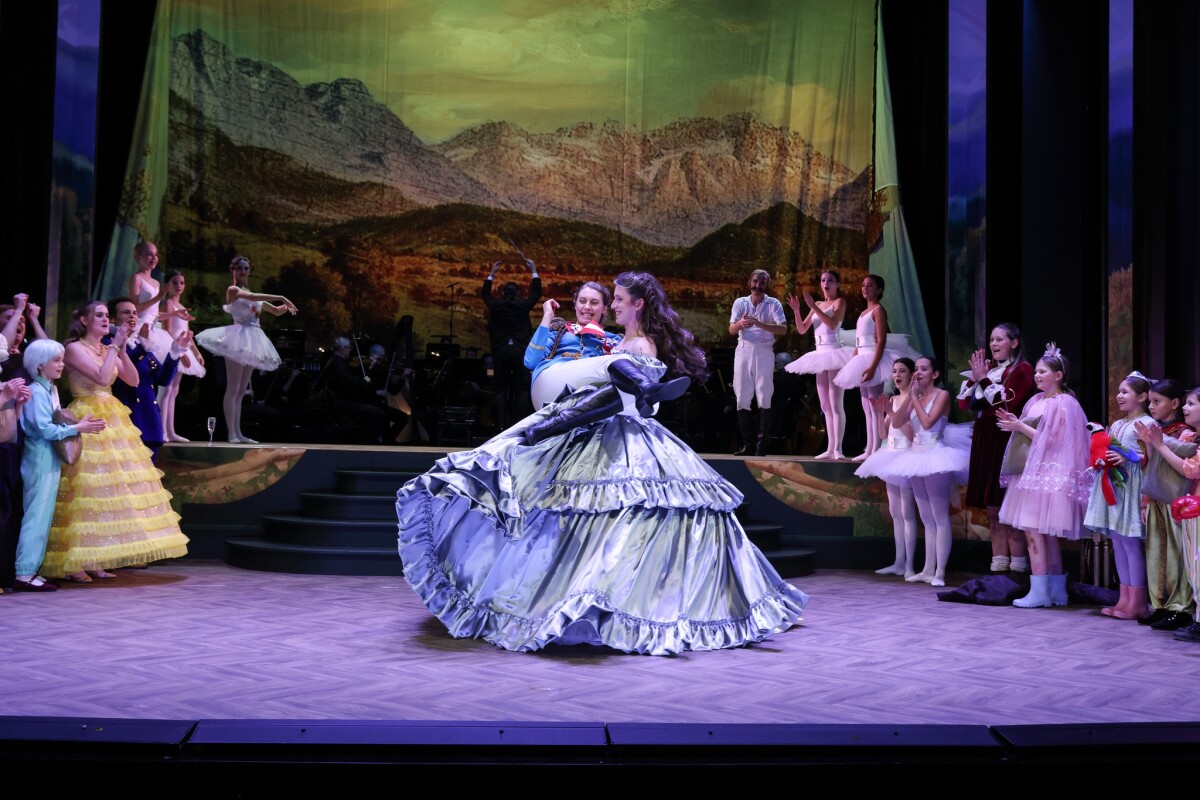
A waltz finale in “Sissy” with Lieke Hoppe and Arvid Fagerfjäll. (Photo: Jörg Landsberg/Theater Bremen)
In Bremen, Hilbrich triumphs once more with an unlikely piece (unlikely, at least, considering his usual preference for theatrical “problem” works). His Sissy is a riotous, intelligent, and musically vibrant reminder that operetta — when approached with courage and imagination — can feel not just revived, but newly alive.
To read a new German language essay on Sissy by Nick-Martin Stern on the theater’s homepage, click here.
Wokeness and stupidity at its worst.
(Or: if theaters don‘t have ideas any more…)
die berichterstatter jubeln wie immer…dabei auch das bremer haus fast leergespielt: 2. rang immer gesperrt?bemerken sie wohl nicht?
I completely agree with Peter. What a dissapointment. Making fun out of love story, being cynical. Awful trends.. and I’m only born ’93.. Keep your Christian values (love, sacrifice, service,..), or you gonna end up with someone else’s, Europe.. Visiting Bremen, b