
Kevin Clarke
Operetta Research Center
21 January, 2026
The revival cycle of DDR operettas continues. After the Komische Oper Berlin recently cancelled its planned production of Gerd Natschinski’s Oscar Wilde adaptation Mein Freund Bunbury—based on The Importance of Being Earnest—the work is now being revived in Annaberg-Buchholz, a town in Saxony near Chemnitz.

Poster image for “Mein Freund Bunbury” in Annaberg-Buchholz. (Photo: Vincent Stefan)
At the Eduard-von-Winterstein-Theater, Natschinski’s 1964 operetta is presented in a new production by Oliver Pauli, who is also responsible for the choreography. The Erzgebirgische Philharmonie Aue performs under the musical direction of Lukas Natschinski, the composer’s 30-year-old son. This is of particular interest, as Natschinski Jr. has been a very visible advocate for his father’s work, actively promoting it on numerous occasions, including on social media.
The libretto was written by Helmut Bez and Jürgen Degenhardt and is a free adaptation of Oscar Wilde’s comedy. For its original ideological DDR purposes, the story was reworked in order to foreground the obligatory critique of capitalism and “late bourgeois decadence” more clearly. According to the theatre’s press release, this is what it’s all about: who exactly is the mysterious Mr. Bunbury? Essentially, he serves as the perfect alibi for the two friends Jack and Algernon. Jack repeatedly excuses himself by claiming to visit Bunbury so that he can spend time with his (secret) beloved Gwendolen, while Algernon likes to say that Bunbury longs for his company, thus enabling him to frequent the music halls at leisure.
There he encounters Jack’s niece Cecily, a hardworking modern woman who must labor as a “Sunshine Girl” to get by financially. Her role, delighting male patrons, can be read as a pointed criticism of a patriarchal system that forces women to sell their bodies for survival. Naturally, he is unaware of her true identity and, in order not to reveal his own, introduces himself as Bunbury. What follows is a fast-paced chain of mistaken identities that quickly spins out of control and is sure to provide audiences with an entertaining evening at the theatre.
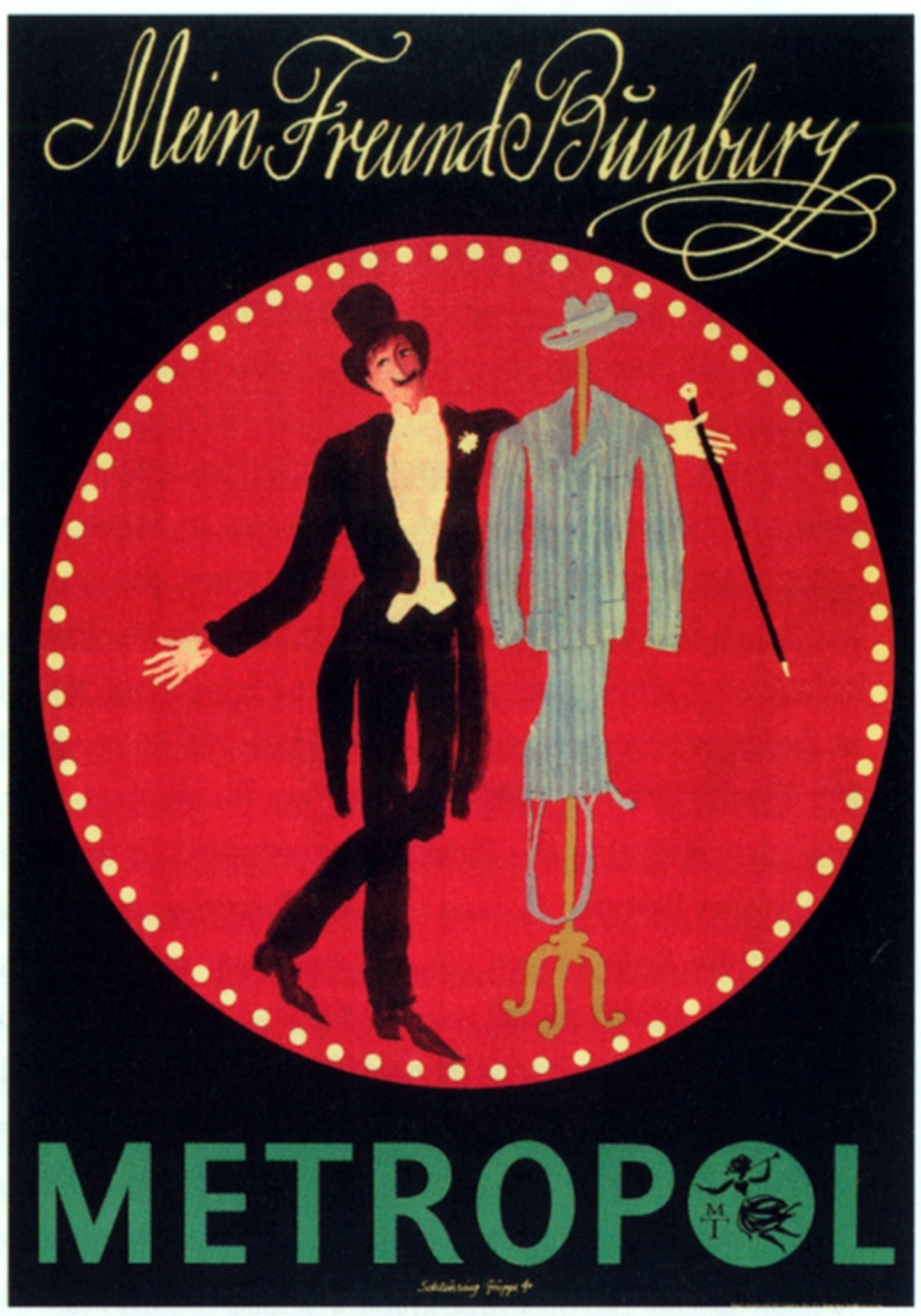
Poster for “Mein Freund Bunbury” at the Metropol Theater in East-Berlin, 1973.
At its premiere in 1964, Mein Freund Bunbury was a major success. Thanks to its amusing plot, witty dialogue, irresistibly driving rhythms, and a wealth of catchy songs and memorable tunes, the most famous musical of the DDR has lost none of its wit or vitality to this day. Of course, the upper classes were ridiculed, while Jack and his sister are presented as (mostly) upright working-class people who get caught up with a different style of life.
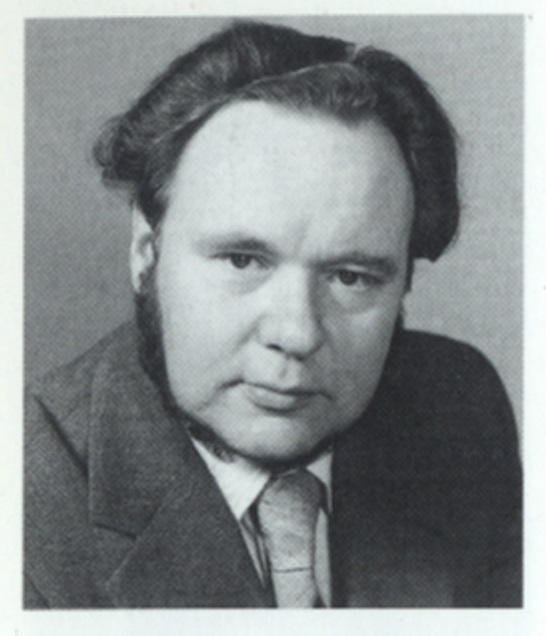
Composer Gerd Natschinski. (Photo: William Pauli)
The principal roles are performed by Vincent Wilke as Jack, Richard Glöckner as Algernon, Zsófia Szabó as Cecily, and Magdalena Hallste as Gwendolen. Additional roles are taken by László Varga, Bettina Grothkopf, and Leander de Marel. A special highlight is the appearance of Gundula Natschinski—star of the former Metropol-Theater—as Lady Bracknell. She is the composer’s widow, accompanied here by her son—one might well describe it as a kind of family reunion.
Following the premiere on 7 February 2026, further performances will take place on 22 February (3:00 p.m.), 4 March, 7 March, 15 March, 20 March, 29 March (again at 3:00 p.m.), 5 April, and 12 April (one more performance at 3:00 p.m. which means you can easily get back early by train).
Further information is available here.