
Kevin Clarke
Operetta Research Center
31 December, 2025
It is not unfair to say that the Vienna New Year’s Concert, performed by the Vienna Philharmonic, has become something of a “same procedure as every year” ritual. That is both its charm and its Achilles’ heel. Over time, the event has grown increasingly boring, often featuring conductors with little apparent connection to entertainment music or Viennese dance culture.
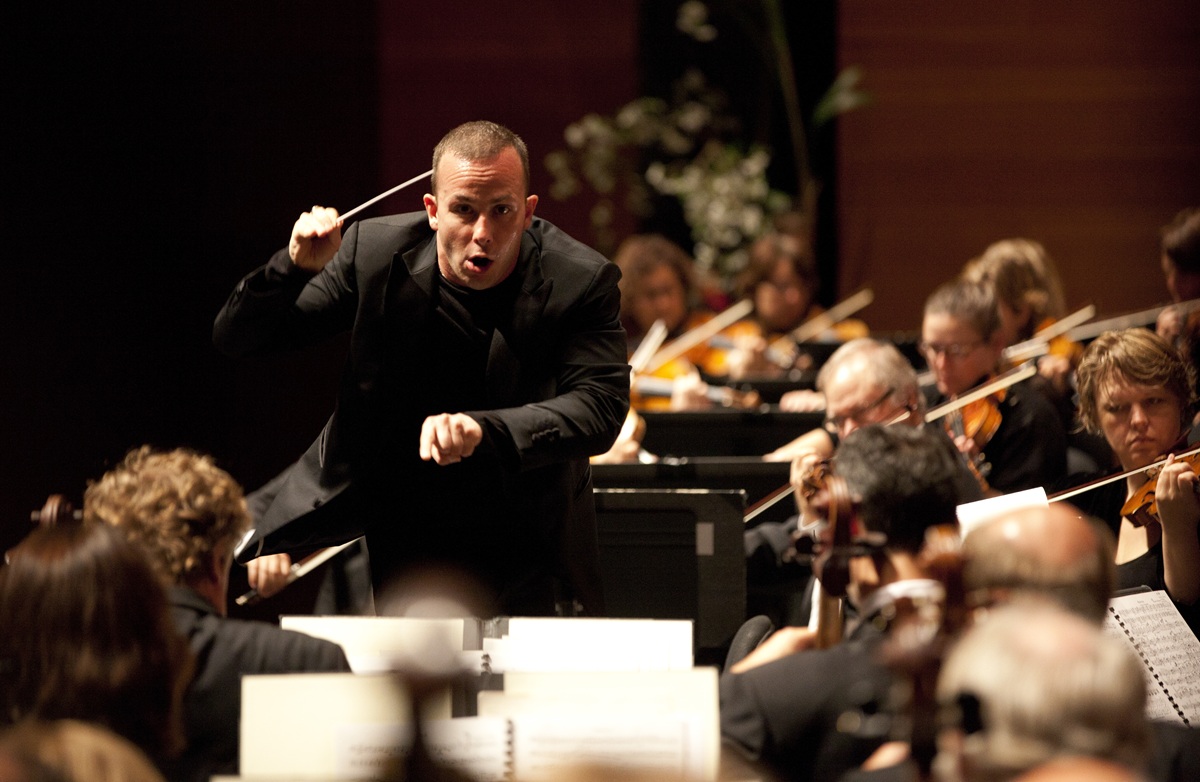
Conductor Yannick Nézet-Séguin. (Photo: Quincena Musical/CC BY 2.0)
This year, however, the Canadian conductor Yannick Nézet-Séguin—music director of the Metropolitan Opera and conducting the Vienna New Year’s Concert for the first time—steps onto the podium of the gilded Musikverein, bringing a sense of renewal. Although best known for his work in opera and the core symphonic repertoire, he has repeatedly demonstrated an affinity for dance-based and entertainment-oriented music.
As always, the concert will be broadcast to more than 150 countries, with an expected global audience of over 50 million viewers. By any measure, that is enormous.
So what can we expect? For a start, an intriguing operetta-centered opening: the overture to Johann Strauss II’s first stage work, Indigo und die 40 Räuber. Originally written for superstar Marie Geistinger and steeped in the era’s taste for highly erotic “oriental” fantasy, the work is a mixture of exotic spectacle and racy farce—well worth rediscovery.
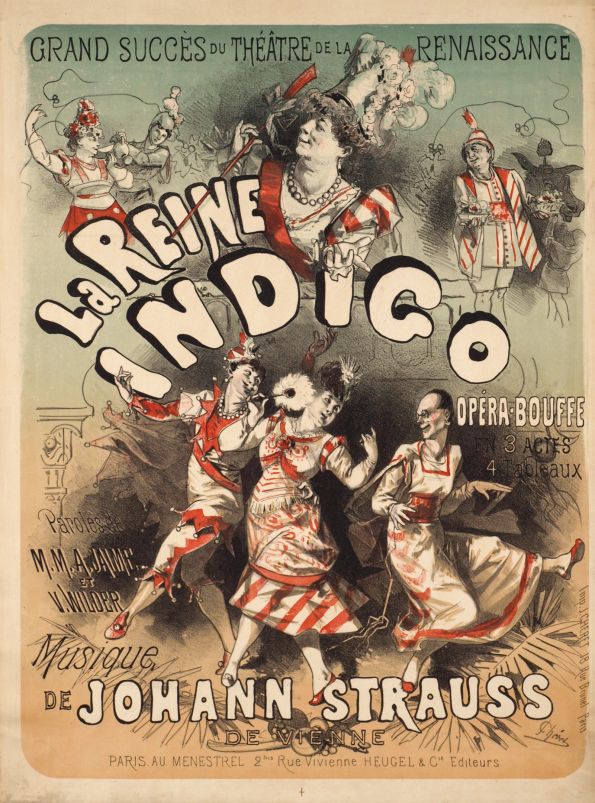
Poster for the French version of Johann Strauss’s “La Reine Indigo.”
Operetta remains a recurring theme throughout the program. The familiar Fledermaus-Quadrille assembles beloved melodies from Strauss’s 1874 masterpiece into a lively dance potpourri. Another highlight is the overture to Schöne Galathée by Franz von Suppé, one of the catchiest works in his output and a reminder of a one-act operetta tradition that is sadly neglected by most of today’s theaters.
Particularly noteworthy are several new additions to the New Year’s Concert repertoire. The Rainbow Waltz by Florence Price (1887–1953) marks a historic moment: Price, an African-American composer whose music has only recently been reclaimed, has been championed extensively by Nézet-Séguin, including through several recordings on Deutsche Grammophon. Her music blends late-Romantic European forms with African-American spirituals, dance rhythms, and lyrical warmth, and her inclusion signals a cautious but meaningful expansion of the traditional canon.
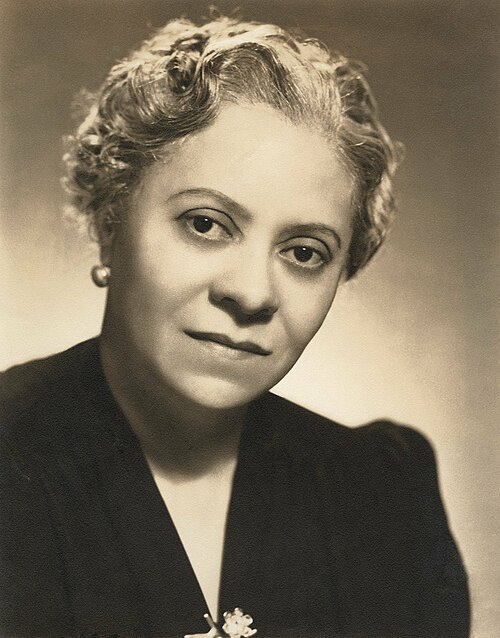
Composer Florence Price, circa 1940. (Photo: George Nelidoff/University of Arkansas Digital Collections)
The Rainbow Waltz was originally composed as a piano waltz. For the Vienna New Year’s Concert, it has been arranged for orchestra by Wolfgang Dörner (b. 1959), a specialist in 19th‑century dance and light music. One could interpret the title as a subtle nod to queer culture, not usually visible at the New Year’s concerts but something openly gay conductor Nézet-Séguin is a proud champion of.
Another female composer appears in the program with Josephine Weinlich (1848–1887), represented by her polka-mazurka Sirenen-Lieder (“Siren Songs”). Also unusual in this context is the Københavns Jernbane-Damp-Galop by Danish composer Hans Christian Lumbye (1810–1874), often dubbed “the Strauss of the North.” Inspired by the Viennese waltz tradition, Lumbye adapted its elegance and sparkle to Scandinavian tastes, producing a large body of polkas, galops, and marches; the Københavns Jernbane-Damp-Galop, with its playful evocation of steam engines, reflects the 19th century’s fascination with technology and modernity.
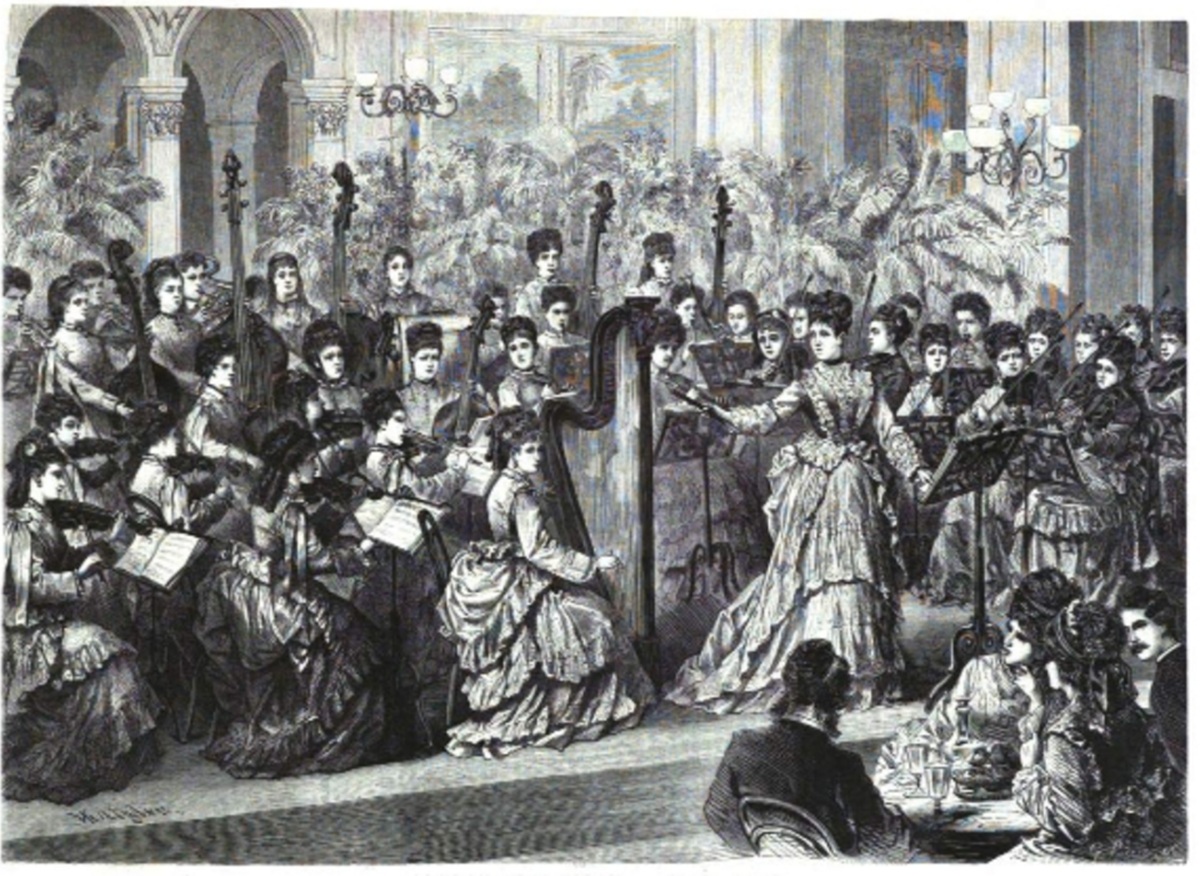
Josephine Weinlich and her “Damenorchester” in 1874. (Photo: Vincenz Katzle/CC0 1.0)
And lest anyone fear too radical a departure, traditional titles are firmly in place: Rosen aus dem Süden, with its glorious melody borrowed from Strauss’s operetta Das Spitzentuch der Königin, provides familiar warmth. As a subtle nod to current global tensions, Josef Strauss’s Friedenspalmen (“Palms of Peace”) is chosen as the concert’s official finale—before the inevitable encores of An der schönen blauen Donau and the Radetzky March.
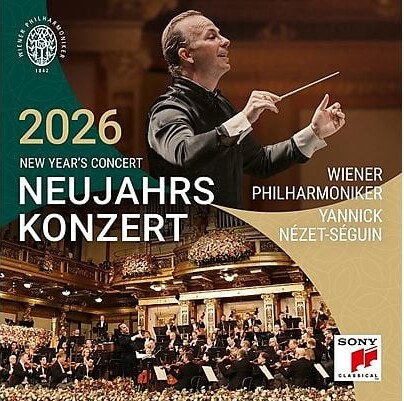
The CD cover of the Neujahrskonzert 2026. (Photo: Sony Classical)
The recording of the concert will be released by Sony Classical on 16 January.
Oddly, what the Vienna Philharmonic performed on Jan. 1 2026 was a strange, incoherent piece that sounded nothing like Ms. Price’s charming “Rainbow Waltz”.