
Kevin Clarke
Operetta Research Center
12 September, 2026
One can only marvel: the rediscovery of East German operetta, forgotten for decades – or, perhaps more accurately, ignored – is no longer something that the Komische Oper Berlin can claim as its own. No, at Theater Nordhausen, following the example of Mokka-Hits und Milchbar-Träume by Axel Ranisch and Adam Benzwi, they have now ventured into a revue bringing together a best-of selection of works from the era of “real existing socialism”. Its title: Eine Datsche auf Tahiti.

The poster for “Eine Datsche auf Tahiti”. (Photo: Theater Nordhausen/
Loh-Orchester Sondershausen GmbH)
The premiere of this concert-format production took place on 11 September at Theater im Anbau. The Loh-Orchester Sondershausen performed under the baton of Annalena Hoesel, with Amelie Petrich (soprano), Juliane Bischoff (mezzo-soprano), Marian Kalus (tenor), and Thomas Kohl (bass) as soloists. Performances are scheduled through March 2027.
And what is there to hear? Officially, the program promises “the most beautiful melodies by Gerd Natschinski, Conny Odd, Gerhard Kneifel, Guido Masanetz and others (…) They were considered en vogue, but after reunification they fell into oblivion – unjustly so: hits, musicals and operettas from the DDR. A highly vibrant musical theatre and operetta culture existed there beyond the familiar mainstream. The musical theatre works of Gerd Natschinski in particular, often referred to as the ‘DDR Gershwin’, enjoyed cult status and have recently been finding their way back onto theatre programs, above all the musical Mein Freund Bunbury.
Natschinski’s first work for the musical theatre, the operetta Messeschlager Gisela, also remains memorable for its spirited melodies, which are bound to get more than a few toes tapping.
Gerd Natschinski composed the piece for Berlin’s Metropoltheater, aiming for it to be ‘modern and experimental, yet rooted in the experience of the finest traditions’.
In Frisco ist der Teufel los, a work somewhere between operetta and musical by Guido Masanetz, born in what is now the Czech Republic in 1914, ventures musically into the capitalist West – into the world of blues, soul and Spanish folklore. One catchy tune follows another, offering an escape from everyday life under socialism.”
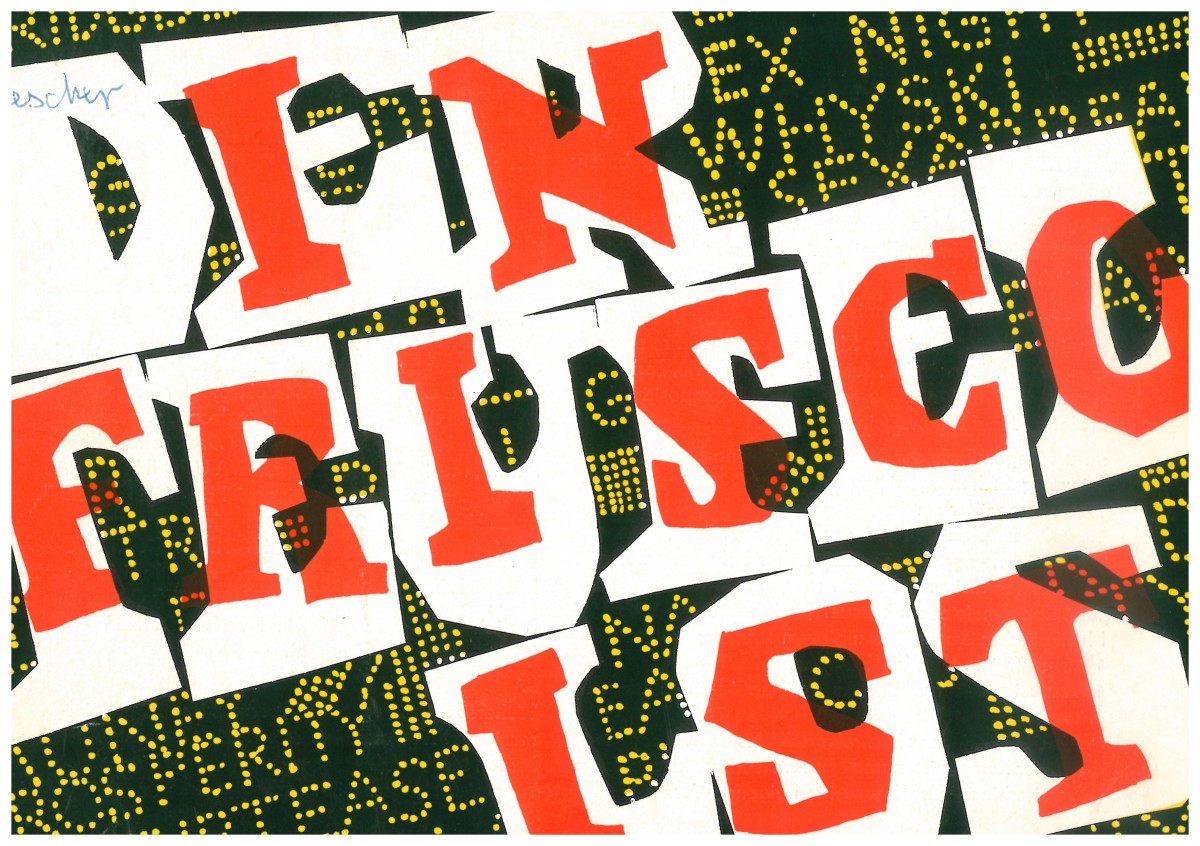
Cover of a program for “In Frisco ist der Teufel los” from 1965. (Photo: Archiv of the Operetta Research Center)
And the press release continues: “With ‘Von der Hudsonbay bis Feuerland’ and ‘Seemann, hast du mich vergessen?’, the concert demonstrates why the piece was so popular.
Alarm in Pont-L’Éveque by Conny Odd (the pseudonym of Carlernst Ortwein) is subtitled ‘Ein krimineller Vorgang und Musik’ and takes us to Normandy – into a prison – in highly entertaining fashion, with fast-paced interludes and chansons such as ‘Nach der Premiere beginnt die Misere.’
The musical Bretter, die die Welt bedeuten by Gerhard Kneifel was created using the farce Der Raub der Sabinerinnen.”
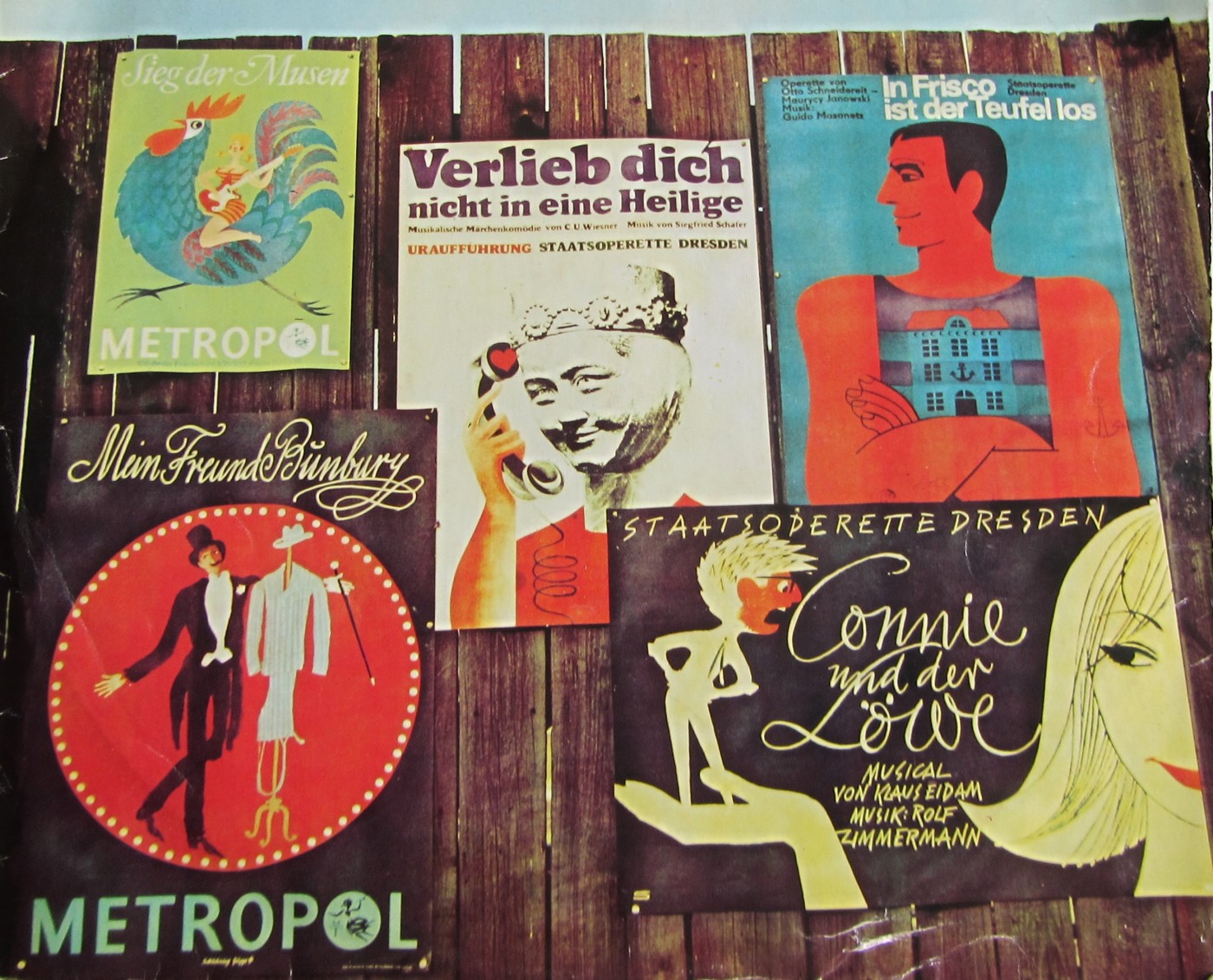
Various famous operettas from Eastern Germany, as presented on an LP cover in the GDR.
The ensemble of soloists opens the concert in suitably theatrical fashion with Bretter, die die Welt bedeuten. For context: Bretter, die Welt bedeuten will also be presented at the Komische Oper in December as a concert version of their Christmas operetta series. The musical direction will be by Kai-Tietje, with Ruth Brauer-Kvam directing.
For performance dates in Nordhausen, click here.