
Kevin Clarke
Operetta Research Center
11 September, 2026
With Bühne der Träume, Markus Hagel presents the first revue devoted to the life and work of theatre director and choreographer Erik Charell. In the 1920s, Charell helped shape the image of Berlin’s Golden Twenties with modern revues and operettas featuring stripping men and homoerotic subtexts, and lots of jazz.

Erik Charell at the Cannes film festival, in the 1950s. (Photo: Archiv of the Operetta Research Center)
The fact that Erik Charell – born Erich Karl Löwenberg in Breslau in 1894 – was once “Germany’s Greatest Showman”, and that in the 1920s he set international standards at the Großes Schauspielhaus with his revues and revue operettas, prompting even the New York Times to wax ecstatic about them, is something almost nobody remembers today.
His former international hits, above all the jazzy Alpine parody Im weißen Rössl (1930), the early sound-film operetta Der Kongress tanzt (1931), and the post-war musical Feuerwerk, filmed in 1954 with Romy Schneider and Lilli Palmer, are still performed in many places. Yet hardly anyone knows the man behind them. And for decades, the world deliberately closed its eyes to their subversively gay subtext.
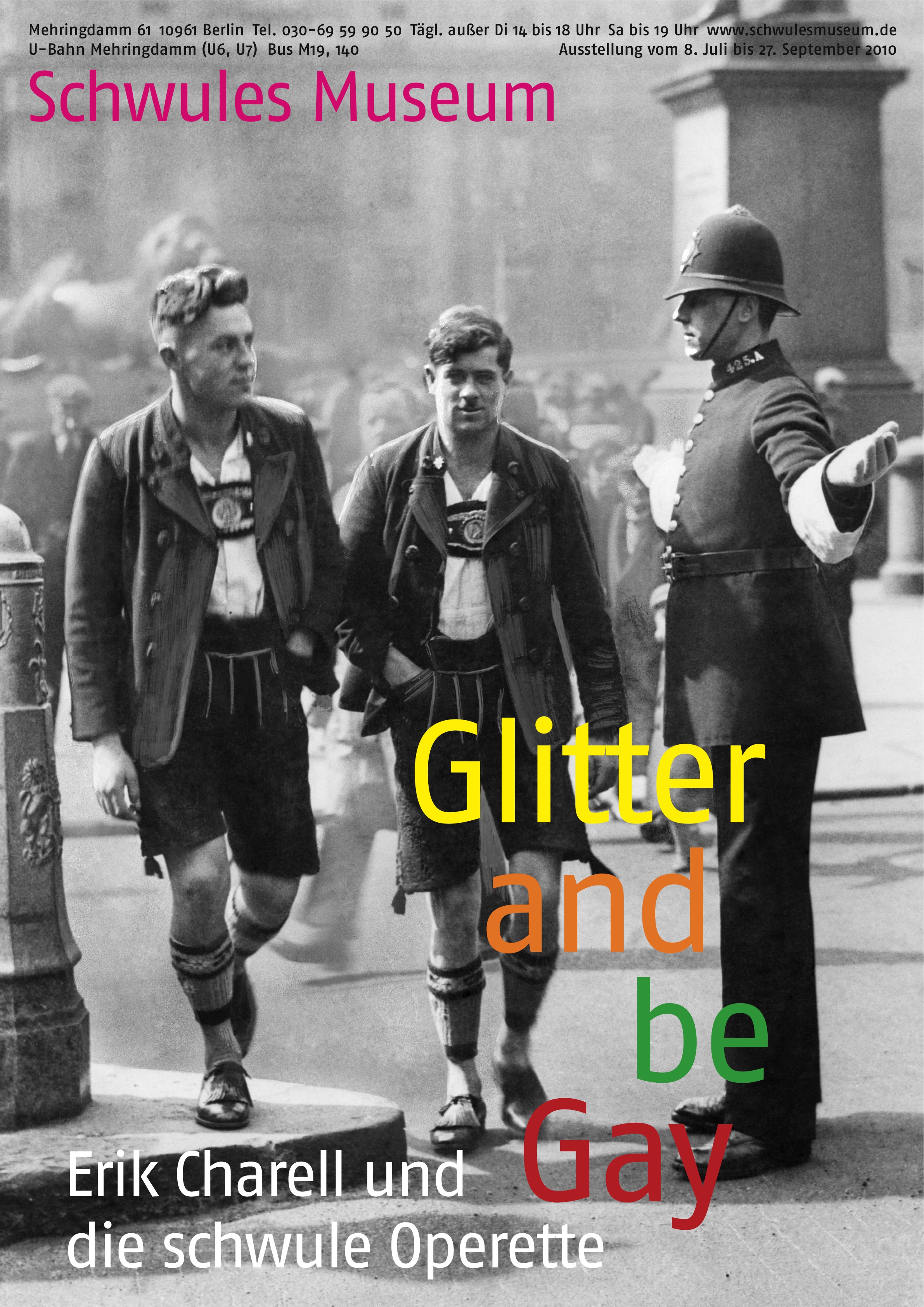
Poster for the Erik Charell exhibition at the Schwules Museum Berlin, 2010.
The Schwules Museum began to change this in 2010 with the world’s first exhibition devoted to Charell’s career and his LGBTQ networks: Claire Waldoff and Wilhelm Bendow as his masters of ceremonies; his discoveries Marlene Dietrich and the Comedian Harmonists; the Tyrolean boys he repeatedly featured (“Juicy lads pounding their things down in time – my God, they’ve got the sturdy cheeks for it”); his revolutionary approach to female and male nudity on stage; and his collaborations with the UFA dramaturge Hans Müller and Swiss composer Paul Burkhard (“O mein Papa”).
But at the time, nobody at the museum could explain why Charell, who had returned to Germany from exile, suddenly withdrew completely from public life in 1954 – precisely when Feuerwerk was enjoying a triumphant run at the box office. Was it the conservative Heimatfilm aesthetic of the post-war period, so diametrically opposed to Charell’s cosmopolitan vision of entertainment? Was it the continuing antisemitism, or the blatant homophobia of the Adenauer era?
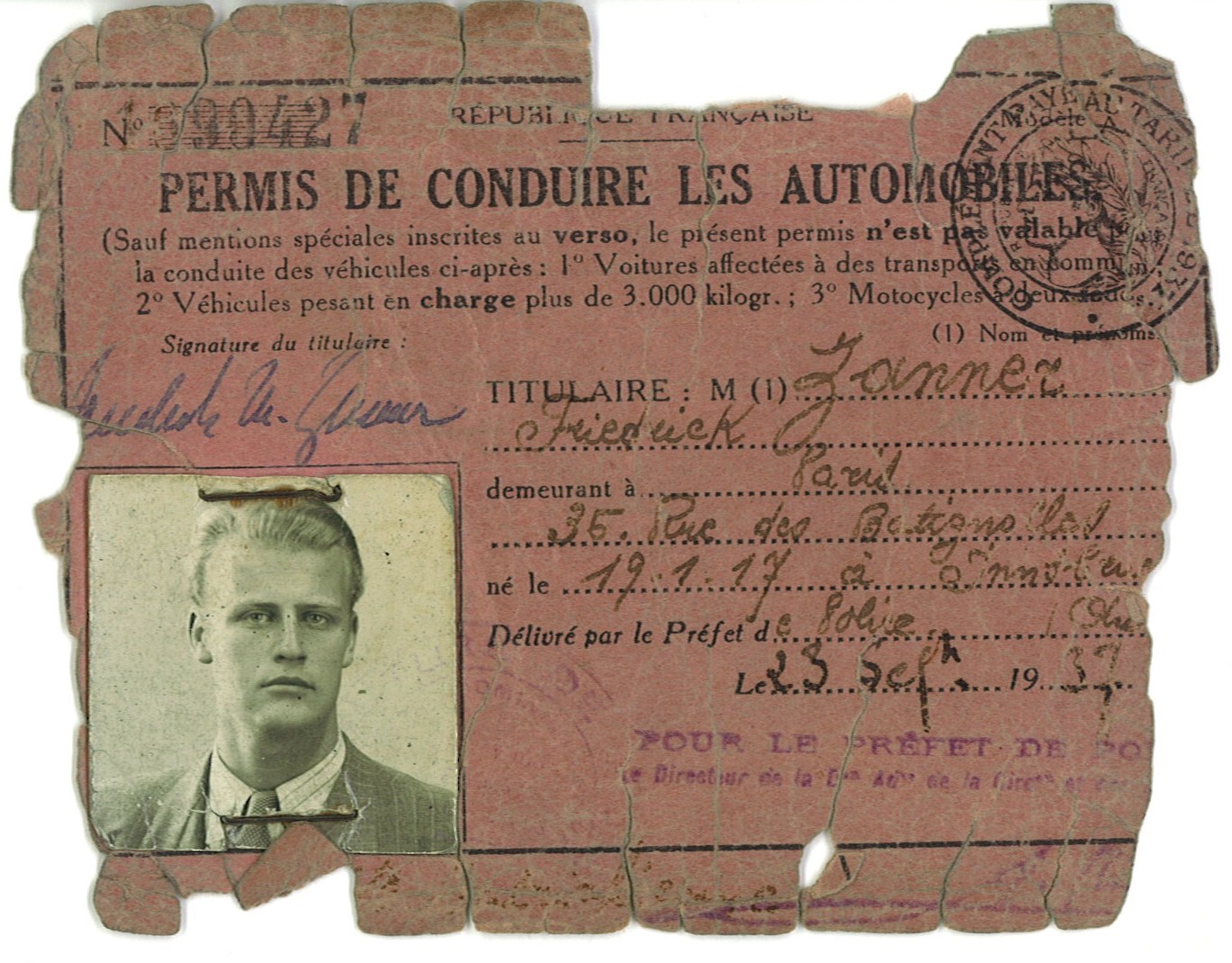
Copy of Friedrich Zanner’s driver’s license, given to the Operetta Research Center by Mr. Zanner’s widow.
Only in recent years has more come to light on these questions, after the widow of Charell’s life partner, Friedrich Zanner, agreed to provide the curator of the Schwules Museum exhibition with personal material. As that curator, I have tried to make these new findings as accessible as possible to a wider audience. (In November, a major essay on the subject will be published in the anthology Jüdisches Filmerbe, edited by Lea Wohl von Haselberg.)

The book “Jüdisches Filmerbe”. (Photo: Neofelis Verlag)
While we are likely to have to wait a while longer for a biopic about Charell along the lines of The Greatest Showman, Markus Hagel has decided to devote a revue to the larger-than-life Charell – of all places, at the tiny AHA (Allgemeine Homosexuelle Arbeitsgemeinschaft). It follows his biographical-musical productions about Bruno Balz (2024) and Hildegard Knef (2025). Speaking to the queer magazine SIEGESSÄULE, Hagel explains: “I was thinking about which queer artist with a strong connection to Berlin deserved to be honored, and about whom there wasn’t all that much available yet. And that’s when I came across Charell.”
Hagel promises a multimedia evening featuring dramatic scenes and live music, accompanied by photographs and videos. Charell will be played by Moritz Kurtz, with singers including Heiko Reissig, Margarete Huber and Markus Bongartz, as well as Maren Arnhold as Claire Waldoff. Rainer Dores-Remmel will take on several supporting roles. Jens Lietzke will serve as musical director at the piano.

Poster for Charell’s revue “Von Mund zu Mund”.
Whether the production will be as cosmopolitan, modern and glamorous as Charell’s revues once were is doubtful. Performers such as the crooning tenor Reissig suggest something closer to maximum trash. Still, the evening will offer the chance to hear some rare music, including material from the Broadway flop Swingin’ the Dream, Charell’s 1939 adaptation of A Midsummer Night’s Dream, which featured an all-Black cast including Louis Armstrong and Maxine Sullivan. The production was rejected by white audiences of the time, despite hit songs by Jimmy Van Heusen and stage designs by Walt Disney.
Yes, this Bühne der Träume revue is a niche labor of love. Yes, it will probably be terribly trashy. But at least the evening pays tribute to a theatre pioneer who deserves far more attention – particularly in Berlin. Hollywood can follow.
For performance dates and more details, click here.